
General News
17 January, 2023
Global variation in the fate of coral reefs
SCIENTISTS from James Cook University and the Smithsonian Tropical Research Institute have found that the type of algae (seaweed) that replaces dead corals varies in different oceans worldwide.
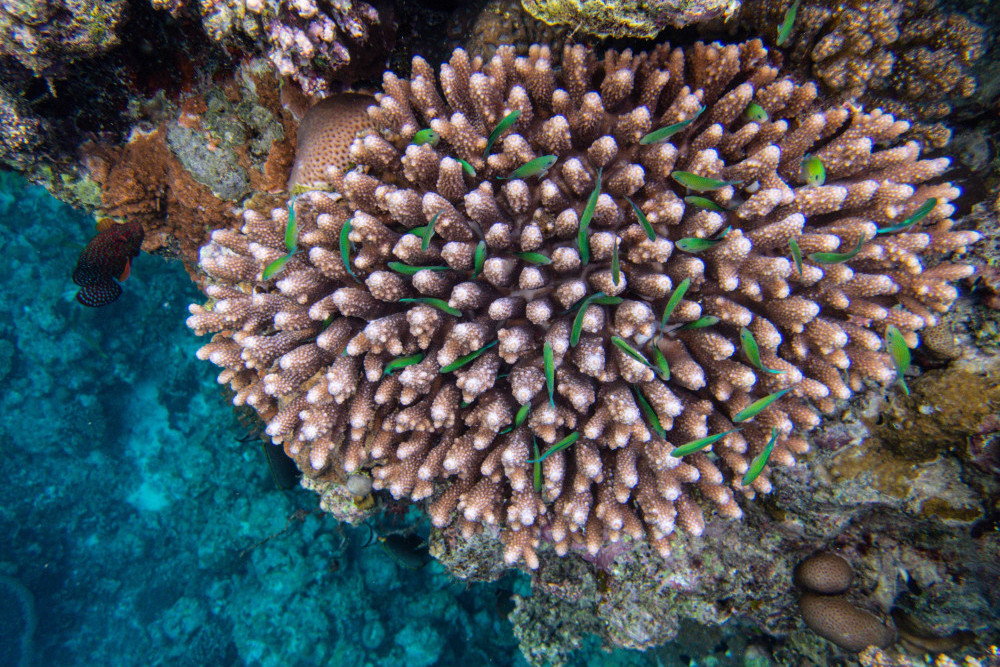
The research shows that reefs function differently around the globe and provides insights into how they may respond to ongoing human impacts.
Dr Sterling Tebbett, a postdoctoral research fellow at JCU, led the detailed global assessment of changes in coral reefs spanning the last four decades.
He said human-induced stressors on reefs may now be so significant that returning altered reefs to what they were in the past may no longer be possible.
“The primary goal now is to try and sustain the core functions of healthy reefs and to make sure they can still deliver the vital services they provide to people, such as providing protein from fisheries and aesthetic value for the tourism industry,” Dr Tebbett said.
“To do this, we need to understand what future coral reef ecosystems will look like on a global scale,” JCU co-author Professor David Bellwood said.
The JCU-led team compiled a dataset of more than 24,000 observations of the seabed composition on coral reefs from around the world, focussing on the 22 years from 1997, before the first global mass-coral bleaching event, until 2018.
Professor Sean Connolly, from the Smithsonian Tropical Research Institution, said reefs in the Western Atlantic/Caribbean suffer more when coral cover is lost because they are more prone to an increase in tall, fleshy macroalgae and seaweeds.
“In contrast, on many reefs in Indo-Pacific regions, dead corals are more likely to be replaced by lower-lying turf-like algae, which can, in turn, be replaced by new corals if the organisms that keep those algae in check, like grazing fishes, are not too depleted by exploitation,” Professor Connolly said.
Professor Bellwood said in the Indo-Pacific, the spotlight has been on tall macroalgae replacing corals.
“But in reality, increased tall seaweed appears to be a Caribbean phenomenon. Instead, turflike algae are a big deal over here. If we are to understand the functioning of future reefs in the Indo-Pacific, focusing on these turf algae will be critical,” Professor Bellwood said.
Dr Tebbett said these long-term geographic trends are very helpful to scientists and managers because reefs typified by tall macroalgae versus low-lying turf-like algae behave quite differently.
“For example, short turf-like algae can be highly productive and provide food resources for a range of reef fishes that are important in reef fisheries,” Dr Tebbett said.
“Furthermore, if fishes keep turf-like algae in a well-mowed condition, then reefs with this type of algae are not resistant to the return of corals after disturbance. In contrast, larger macroalgae can inhibit coral settlement, growth and recovery.”
He said ecosystems globally are being reconfigured by a range of intensifying humaninduced stressors and coral reefs are at the forefront of this environmental transformation.
“By understanding the differential nature of reef change across broad geographic areas, we can adapt our management strategies appropriately,” Dr Tebbett said.
“In this respect, understanding how to maintain turf-like algae in a well-mowed condition across many reefs appears critical to ensure reefs can remain productive and recover from disturbance.”
“Nevertheless, global climate change is the foremost pressure on the world’s coral reefs, and, in turn, management of this stressor remains the first priority.”